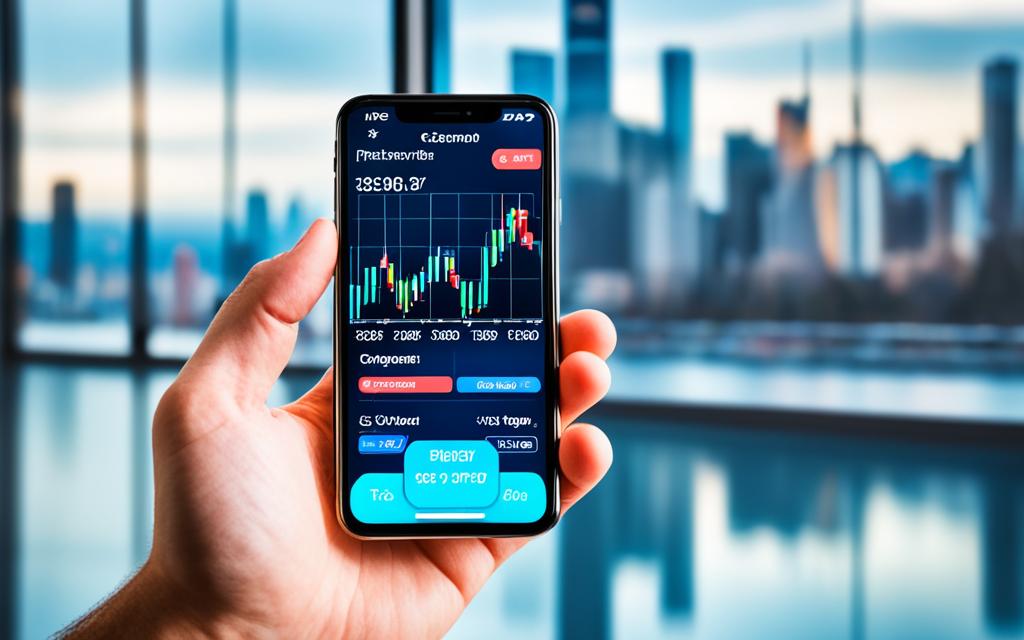
Welcome to our comprehensive beginner’s guide, where we will walk you through the exciting world of forex trading on your phone. If you’re new to forex trading and eager to learn how to trade on your smartphone, then you’re in the right place!
Trading forex on your phone offers convenience, flexibility, and the ability to capitalize on market opportunities anywhere, anytime. In this guide, we will cover all the essential aspects of mobile forex trading, from getting started to implementing effective strategies.
Whether you’re commuting to work, waiting in line, or simply relaxing at home, with the right knowledge and tools, you can trade forex on your phone with confidence.
Throughout this guide, we’ll provide valuable insights on setting up your trading account, choosing the right broker, and using reliable apps to streamline your trading experience. You’ll also discover essential strategies that will help you navigate the forex market successfully.
So, if you’re ready to embark on your forex trading journey from the convenience of your phone, let’s dive in and explore the world of mobile forex trading for beginners!
Getting Started with Mobile Forex Trading
Forex trading on your phone offers convenience and flexibility, allowing beginners to participate in the global financial markets anytime, anywhere. In this section, we will guide you through the essential steps to get started with forex trading on your phone.
1. Setting Up a Trading Account
The first step is to open a trading account with a reputable forex broker. Ensure that the broker offers a mobile trading platform compatible with your phone’s operating system. Choose a broker that provides a user-friendly interface, advanced charting tools, and reliable execution speeds.
2. Choosing a Reputable Broker
When selecting a broker, consider factors such as regulation, customer support, and trading costs. Look for brokers regulated by reputable authorities like the National Futures Association (NFA) or the Financial Conduct Authority (FCA). Additionally, check for positive reviews and a strong track record of client satisfaction.
3. Familiarizing Yourself with the Trading Platform
Once you have chosen a broker, download their mobile trading app from the App Store or Google Play Store. Take the time to familiarize yourself with the platform’s features and functionality. Practice using the demo account to get comfortable with executing trades, analyzing charts, and managing risk.
4. Managing Risk and Developing a Trading Plan
Risk management is crucial in forex trading. Before placing any trades, develop a solid trading plan that includes your risk tolerance, profit targets, and trade entry and exit strategies. Use stop-loss orders to limit potential losses and regularly review and adjust your plan as market conditions change.
By following these steps, beginners can confidently embark on their forex trading journey on their mobile devices. In the next section, we will explore essential strategies for successful mobile forex trading beginners.
Essential Strategies for Mobile Forex Trading Beginners
For beginners venturing into the world of mobile forex trading, it is crucial to adopt effective strategies that can enhance their chances of success. By implementing these strategies, you can make confident and informed trading decisions, mitigating risks and maximizing profits. In this section, we will explore three essential strategies for mobile forex trading beginners: trend analysis, technical indicators, and risk management techniques.
Trend Analysis
Trend analysis involves studying historical price movements to identify patterns and trends in the forex market. By understanding the direction and strength of a trend, you can make more accurate predictions about future price movements, enabling you to enter or exit trades at the right time. Two common methods of trend analysis are:
- Identifying Trend Lines: Draw trend lines on your trading charts to connect consecutive higher highs (in an uptrend) or lower lows (in a downtrend). By following the trend line, you can determine potential entry and exit points for your trades.
- Using Moving Averages: Moving averages smooth out price fluctuations and provide a visual representation of the average price over a specified period. By comparing different moving averages, such as the 50-day and 200-day moving averages, you can gauge the direction of the overall trend and make trading decisions accordingly.
Technical Indicators
Technical indicators are mathematical calculations applied to price and volume data, providing insights into market trends and potential trading opportunities. By utilizing these indicators on your trading platform, you can gain valuable information about the market dynamics. Here are three commonly used technical indicators:
- Relative Strength Index (RSI): The RSI measures the speed and change of price movements, indicating whether a currency pair is overbought or oversold. It helps identify potential reversal points, enabling you to enter trades at optimal levels.
- Moving Average Convergence Divergence (MACD): The MACD shows the relationship between two moving averages and identifies potential buy or sell signals. It helps traders identify trend strength and potential trend reversals.
- Bollinger Bands: Bollinger Bands consist of a moving average and two standard deviation lines, representing price volatility. They help identify periods of high or low volatility, aiding traders in making informed decisions about entry and exit points.
Risk Management Techniques
Risk management is essential in forex trading to protect your capital and minimize potential losses. Here are three risk management techniques for mobile forex trading beginners:
- Setting Stop Loss Orders: A stop-loss order is a predetermined level at which your trade will automatically close to limit potential losses. By setting stop loss orders, you can manage your risk and protect your capital from significant drawdowns.
- Using Proper Position Sizing: Determine the appropriate size of your trading position based on your risk tolerance and account balance. Avoid risking too much on a single trade, as it can significantly impact your overall capital if the trade goes against you.
- Implementing Diversification: Diversify your trading portfolio by investing in multiple currency pairs. This helps spread your risk and reduces the impact of adverse movements in a single currency pair.
By applying these essential strategies, beginners can develop a strong foundation for successful mobile forex trading. Remember, practice and continuous learning are key to mastering these strategies and becoming a skilled forex trader.
Conclusion
In this beginner’s guide to forex trading on your phone, we have explored the exciting world of mobile trading and its numerous benefits. By harnessing the power of your phone, you can have the opportunity to enter the forex market and potentially generate profits from anywhere at any time.
We have learned how to get started with mobile forex trading by setting up a trading account, choosing a reputable broker, and familiarizing ourselves with the trading platform. Managing risk and developing a trading plan are crucial aspects that beginners should focus on to maximize their chances of success.
Moreover, we have discussed essential strategies for mobile forex trading beginners, including trend analysis, technical indicators, and risk management techniques. By adopting these strategies, beginners can make informed trading decisions and trade with greater confidence.
With the knowledge and strategies gained from this guide, beginners can now dive into their forex trading journey on their phone. Remember to stay disciplined, continuously learn, and adapt to the dynamic market conditions. Stay connected and make the most of the convenience and flexibility that mobile forex trading offers.